

You didn’t get into self-storage to become a marketer. You got into it because it’s supposed to be one of the more hands-off, recession-resistant businesses you can own. It’s usually not until you’re in the day-to-day that you realize the units don’t fill themselves, and plenty of owners inherit a business they thought was running smoothly, only to find it never had any real online presence.
That online presence is really what local SEO is: making sure your facility shows up when someone nearby searches for storage, and that once they find you, they actually convert. If you’re still leaning on outdated marketing habits and treating your online visibility as an afterthought, you’re already behind.
The Independent Operator’s Actual Advantage (And It’s Real)
The massive storage center down the road has a call center, a paid media budget bigger than your annual revenue, and far more resources than you do. But as a smaller operator, you still have an edge that, if properly managed, can make you the top option in your area.
Corporate chains have a budget, but they also have layers of approval, identical-looking websites across hundreds of locations, and regional managers who’ve never set foot in your facility. A regional manager has to route a Google Business Profile update for approval. You can respond to a review, post a photo of a freshly cleaned drive-up unit, or update your hours the same afternoon something changes. Google rewards that kind of activity and freshness, and it rewards hyper-local specificity, neighborhood names, nearby landmarks, and phrases like “five minutes from the University District,” which corporate templates are structurally incapable of doing well. Corporate storage brands are built to scale across hundreds of locations, not to sound like they know your town and neighborhood.
You know your city, your tenants, and your unit mix better than anyone. That knowledge is worth more in local search than most owners realize; it just needs to be pointed in the right direction instead of spent on another round of generic advice. A bigger competitor can outspend you. It cannot out-know your town, and that’s the edge worth building around.
The Data Backs Up Why This Matters Right Now
There’s a real occupancy gap that tracks with company size. As of Q1 2026, REITs are at 84.5% occupancy, “sophisticated” mid-size operators at 79.8%, and non-designated operators, typically smaller, independently run facilities, average just 70.8%. That’s a meaningful amount of room sitting empty, and it’s exactly the kind of gap that better local visibility can close, since it’s rarely a facility quality problem.
Demand isn’t slowing down either. The share of U.S. households renting at least one storage unit rose from 11.1% in 2022 to 13.4% in 2024, the largest jump between any two survey periods on record. More renters are entering the market every year, and Google’s map pack still drives the vast majority of storage rentals; some estimates put it at above 70% of conversions. That makes the fight for map pack visibility more important, not less.

Local SEO vs. Google Ads: Which Should You Prioritize?
Local SEO and Google Ads both help bring in renters, but they work in different ways. Google Ads can put your facility at the top of search results almost immediately, making it useful for filling vacancies quickly or promoting seasonal specials. The downside is that traffic usually stops when your advertising budget runs out.
Local SEO takes longer to build, but the benefits compound over time. A well-optimized Google Business Profile, strong local content, and consistent reviews can continue generating calls and reservations without paying for every click. For many independent storage owners, local SEO forms the foundation of their marketing strategy, while Google Ads serves as a short-term tool to boost occupancy during slower periods or to promote newly available units.
Why Storage Unit SEO Isn’t “Just Local SEO”
Two things make self-storage search behavior different from almost any other local category.
The first is urgency. People don’t shop around for storage the way they shop for a restaurant. More than half of renters lease from the first facility they contact, and most people call only two facilities before deciding. That means the map pack isn’t just “important” for storage; it’s basically the whole goal. If you’re not in the top three results when someone searches, you may never get the call at all. Take a dentist’s office, for example: it shows up in a map pack too, but people research it, read into the background, and compare reviews slowly. Storage searches don’t work that way. People search when they have an immediate need, compare based on proximity and availability, and call quickly. That rewards a facility that feels current, local, and responsive, exactly the things a corporate chain struggles to fake at scale, and exactly what you can do better as the owner who’s actually there.
The second is that intent is buried in the unit type, not just the city. Someone searching “storage units near me” and someone searching “climate controlled storage near me” are two completely different buyers with different urgency, price tolerance, and objections. The first person might just need somewhere to stash old furniture for a few months and cares mostly about price. The second is often storing something they’re worried about damaging, such as wine, electronics, business inventory, and important documents, and they will pay more if you can reassure them their stuff is protected. Someone searching “RV storage” wants to know about gate height and access hours before they care about price at all.
Someone searching “storage for a semester” is a student or a parent on a totally different timeline than someone in the middle of a move. Most facility websites lump all of this into a single generic “units and pricing” page, which means it answers none of these questions well. When you effectively represent your niche in your local SEO, you attract far more of the right customers.
How Google Decides Which Storage Facilities Rank
Google doesn’t rank storage facilities based on a single factor. Instead, it looks for the business that is most relevant to the search, closest to the searcher when location matters, and most established online. Your Google Business Profile plays a major role, but it also considers the information on your website, the consistency of your business information across the web, and the quality and recency of your reviews.
Think of local SEO as building trust from multiple directions. A complete business profile, accurate contact information, location-focused pages, recent reviews, and useful website content all reinforce each other. Improving just one area helps, but improving all of them together creates a much stronger local presence.
Improving Your Storage Unit SEO
Build your Google Business Profile as if it were your only and strongest asset.
Pick your primary category carefully (Self-Storage Facility) and layer in every accurate secondary category, RV storage, boat storage, moving supply store, if applicable. List every unit type as a service or attribute: drive-up, climate-controlled, vehicle, wine storage, business storage. Don’t make Google guess what you offer. Post weekly, at a minimum, a photo of an actual clean unit, a move-in special, and a seasonal reminder. Big chains batch-schedule generic content across hundreds of locations; yours should sound like it’s coming from someone who’s actually there. Respond to every review, and don’t be generic; mention the unit size or feature they used. That specificity reassures the next reader and reinforces to Google what you actually offer.
One thing worth getting right from the start: you cannot list a self-storage unit or PO box as your business address on Google. Since Google moved to video verification, profiles built around a storage-unit address tend to get suspended within days. Use a real, staffed office address, or set up the listing properly as a service-area business. This trips up more owners than you’d expect, and losing a profile to suspension means losing your reviews as well.
Improving your visibility in Google Maps usually requires doing many small things consistently rather than relying on shortcuts. Complete business information, regular profile updates, fresh reviews, accurate hours, strong location pages, and an active website all work together to improve your chances of appearing in local map results when someone searches for nearby options.
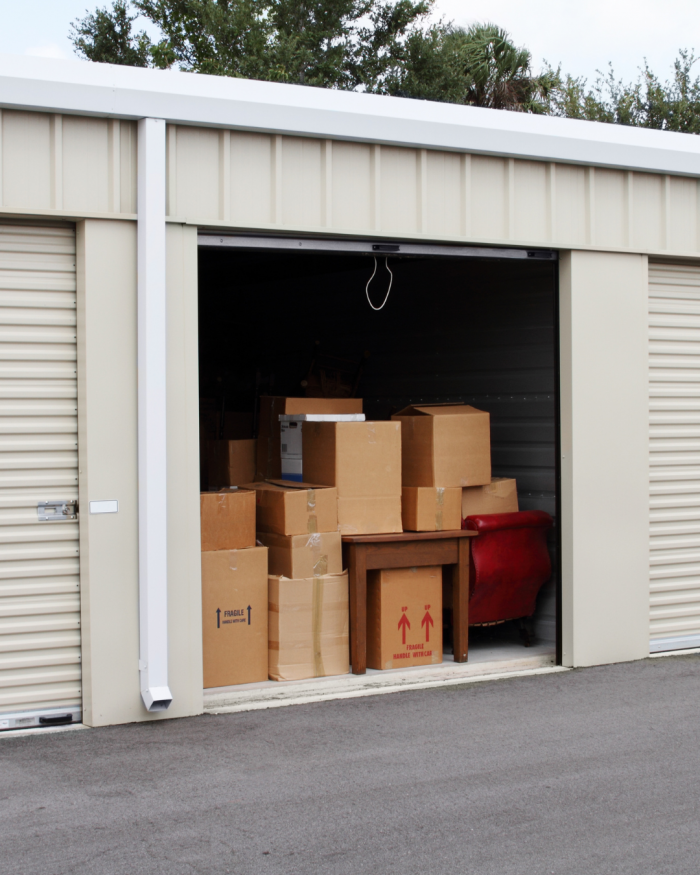
Build a landing page for every unit size and type, not one big “services” page.
This is the one people skip because it feels like a lot of upfront work, but it’s the one with the highest payoff. Someone searching “10×10 storage unit [city]” wants a page about 10×10 units, not your homepage with a size chart buried halfway down. Separate pages for 5×5, 10×10, 10×20, climate-controlled, and vehicle/RV storage each give you a shot at ranking for a specific, high-intent search rather than competing with your homepage for a vague one.
If you run more than one facility, resist the urge to spin up a separate website for each location. One domain with a dedicated local landing page per facility generally outperforms splitting your presence across multiple sites; it keeps your domain authority in one place instead of diluting it. Multiple domains seem like they should improve local relevance, but in practice, they usually just mean more upkeep for a weaker result.
If each facility serves a different area, give each location its own dedicated page with unique information rather than duplicating content across all pages. Each location should explain its available unit types, nearby neighborhoods it serves, local landmarks, and any features specific to that property. This helps both search engines and potential renters understand why each location is relevant to their search.
Go after the searches with intent behind them, not just the ones with volume.
“Storage units” gets a lot of searches and tells you almost nothing about the person searching. “Climate controlled storage near me,” “storage for a semester,” “RV storage [city],” “month to month storage no deposit,” these have real intent attached, and they’re the ones an independent operator can actually rank for without a six-figure budget.
Climate-controlled storage deserves its own content because renters often have different concerns from those of someone looking for a standard unit. Instead of focusing only on availability, explain what kinds of belongings benefit from climate control, describe the feature consistently across your website, and answer common questions that prospective renters may have before they call.
Write for the specific reason people in your town need storage.
Every market has its own demand triggers. Near a college? Semester move-in and move-out timing drives predictable spikes, and content and offers timed to that calendar outperform evergreen posts. Near a military base? This is a bigger deal than most operators realize. Nationally, over a million and a half units are rented to military personnel, and in communities next to a base, that can be a fifth to nearly all of a facility’s tenants. Growing suburb with new construction? Downsizing and staging content for people between houses works well. Be as specific as possible when creating content for your units, and make sure that specificity shows up in your online presence, not just in conversations with tenants.
Don’t ignore how people are starting to search now.
Renters are increasingly asking AI tools directly, “which facility near me has 24-hour access and a 10×15 available this week,” instead of scrolling search results. Winning that isn’t about keywords anymore; it’s about whether your unit sizes, access hours, and climate specs exist as clear, structured information on your site rather than buried in a PDF rate sheet or a third-party booking widget that AI tools can’t read.
Build Visibility Across AI Search Results
GEO, AEO, and AIO describe overlapping methods for improving visibility within AI-generated answers.
GEO focuses on earning accurate mentions and citations inside responses from generative search systems.
AEO focuses on making specific information easy for answer systems to identify and present.
AIO is another industry term used to describe improvements in how content appears in AI search.
For storage operators, these methods start with making facility facts easy to find. Publish unit dimensions, access rules, climate features, and rental terms directly within relevant pages.
Answer common renter questions beside the unit information those questions actually concern. Keep those details consistent across facility pages, Google Business Profile, and other public listings.
Google also recommends keeping structured data consistent with information visitors can actually see. This matters because markup cannot replace missing or unclear information within the visible page.
Detailed facility pages can also answer longer questions that include multiple requirements. A renter might search for a unit by unit size, climate needs, access hours, and location. Clear answers give search systems more usable information for those specific requests.
Keep your reviews coming, not just accumulating.
A pile of old five-star reviews from three years ago carries less weight than a steady, recent trickle. Recency matters nearly as much as total count for how Google ranks you in the map pack. Build a simple, non-incentivized habit around this: ask tenants in person at move-in, drop a review link on invoices and receipt emails, and respond to every review, good or bad, with something specific rather than a generic thank-you.

A Practical Local SEO Checklist
Before moving on to more advanced marketing tactics, make sure you’ve completed the fundamentals:
- Claim and fully complete your Google Business Profile.
- Choose accurate business categories.
- Add high-quality photos regularly.
- Respond to every customer review.
- Create dedicated pages for each major unit type.
- Target search phrases that match customer intent.
- Keep your business name, address, and phone number consistent everywhere they appear.
- Publish content that reflects local demand in your market.
- Keep your website fast and easy to use on mobile devices.
- Review your profile and website regularly to keep information current.
The Most Common Mistake in Storage Marketing
There are many mistakes in storage unit marketing, but the one I see most often is an outdated website paired with a bare-bones, inconsistent Google Business Profile. For a storage facility, your Google Business Profile is often the first point of contact; the phone number is dialed straight from the map pack before your website ever loads. A lot of effort should go toward making that profile as complete, current, and specific as possible before you touch anything else.
I’ve seen a facility’s Google Business Profile sitting at maybe 40% complete: a handful of photos from the year it opened, no responses to reviews, categories left generic. In one case, the facility itself was genuinely excellent, with clean units, fair pricing, a manager who knew half the tenants by name, yet it was effectively invisible online next to a corporate competitor down the road with a far less impressive lot. None of that quality had ever made it into the profile Google actually reads. That gap between what an operator actually offers and what shows up in search results is common and fixable. Closing it doesn’t require a corporate marketing budget; it requires consistent, specific execution. Be sure to keep your profile information up to date at all times!
Measuring Results: What to Track and When to Expect Progress
Local SEO is a long-term investment rather than a one-time project. Some improvements, like updating your Google Business Profile or adding new photos, can strengthen your online presence relatively quickly, while building lasting visibility through location pages, reviews, and helpful content takes more time. The key is consistency. Facilities that regularly update their profiles and websites tend to see better long-term results than those that make a few changes and stop.
Rather than focusing only on rankings, measure your success by tracking the metrics that matter most to your business, including:
- Phone calls generated from your Google Business Profile.
- Online reservation requests and completed rentals.
- Direction requests from Google Maps.
- Website leads through contact forms or availability inquiries.
- Occupancy rates over time.
- Performance of individual pages, such as climate-controlled or RV storage pages, to see which services generate the most interest.
- Review growth and engagement, including new reviews and your response rate.
Over time, these metrics provide a much clearer picture of your local SEO performance than rankings alone. The ultimate goal isn’t simply to appear higher in search results; it’s to generate more qualified leads, increase occupancy, and turn online visibility into long-term rental growth.

The Value of a Dedicated Storage Marketing Partner
You’re running a facility, not a marketing department, and operators who try to handle all of this themselves on top of everything else usually let it slide after the first busy month. That’s simply what happens when the person responsible for the units is also responsible for marketing. This is exactly why it’s worth partnering with a company that specializes in self-storage marketing specifically, not a generalist agency that treats you like any other local business.
Our team at Market Apartments understands the self-storage niche well enough to know that a “climate controlled” searcher and a “cheap storage” searcher need different content. Handing that off to people who live in this niche every day means your local SEO actually gets the attention it needs, and your local story gets told in a way that’s built to convert, not just to check a box. You keep running the facility. Someone who actually knows this space makes sure the internet knows about it too.
The strongest storage marketing partners build the website itself for local SEO and conversion from the start, with unit-focused content, fast mobile performance, and a clear path from checking availability to renting or paying online, so that none of the upstream visibility work goes to waste once someone actually clicks through.
Related posts:



Categorised in: Apartment Marketing, Market Apartments Services
This post was written by Isabella Lagman

Isabella Lagman is a versatile professional writer with a genuine passion for language and storytelling. With over a decade of experience writing about apartment marketing, property management, and the real estate industry, she specializes in creating clear, engaging content that connects with both industry professionals and everyday readers. Her work spans a wide range of formats, from creative storytelling and lifestyle content to informative articles and technical documentation, allowing her to bring both creativity and precision to every project.